
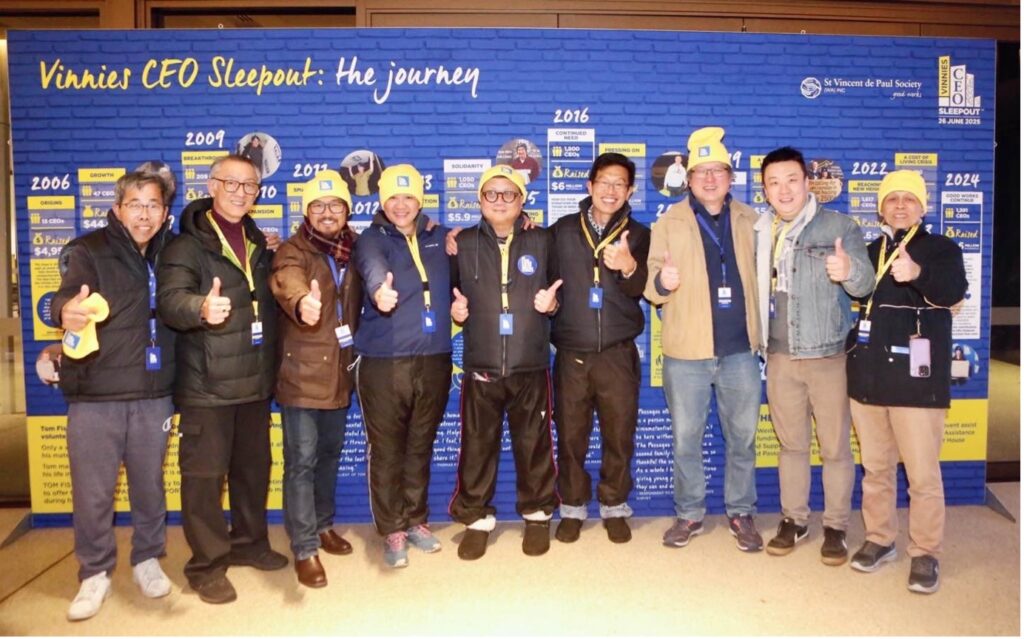
On 18 June 2026, Western Australian business and community leaders spent a cold winter night outdoors at Perth Zoo as part of the annual Vinnies CEO Sleepout.
Organised by the St Vincent de Paul Society WA, the event raises funds and awareness for people experiencing homelessness and housing insecurity across the state.
Among this year’s participants were 12 entrepreneurs, executives and community leaders from Western Australia’s Chinese and broader Asian communities.
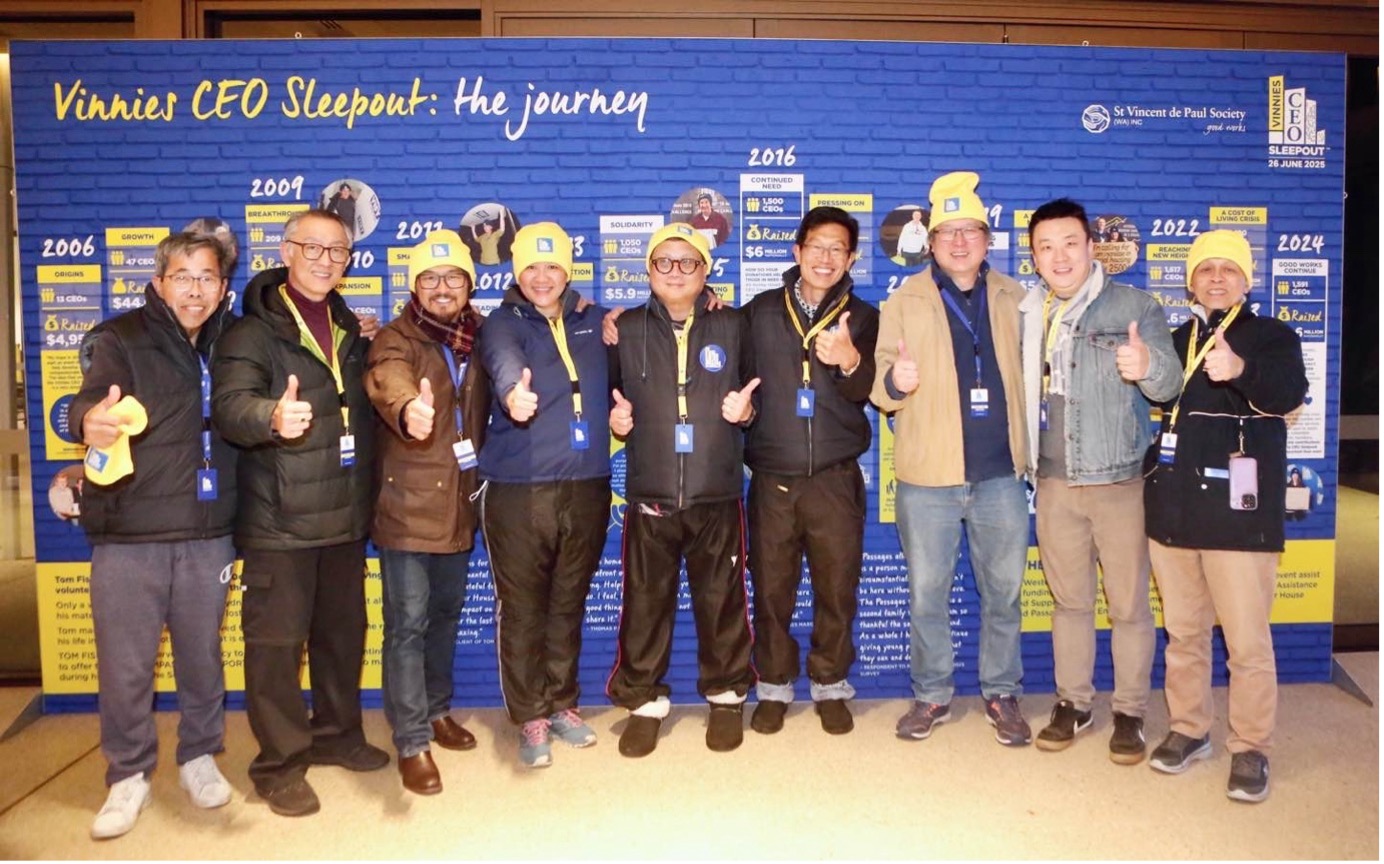
Some had supported the Sleepout for several years, while others were participating for the first time. For them, the experience was not simply about spending one uncomfortable night outdoors. It was an opportunity to better understand a complex social issue and reflect on the responsibilities that come with leadership, influence and success.
Sensory Media spoke with Arnold Wong, Howard Ong and Dr Eunice Sari about the experiences that shaped their commitment to community service and their perspectives on homelessness in Australia.
Arnold Wong: Leadership Comes with Responsibility
Arnold Wong, Treasurer of Software Australia, said his understanding of social responsibility was strongly influenced by growing up in a Chinese family.
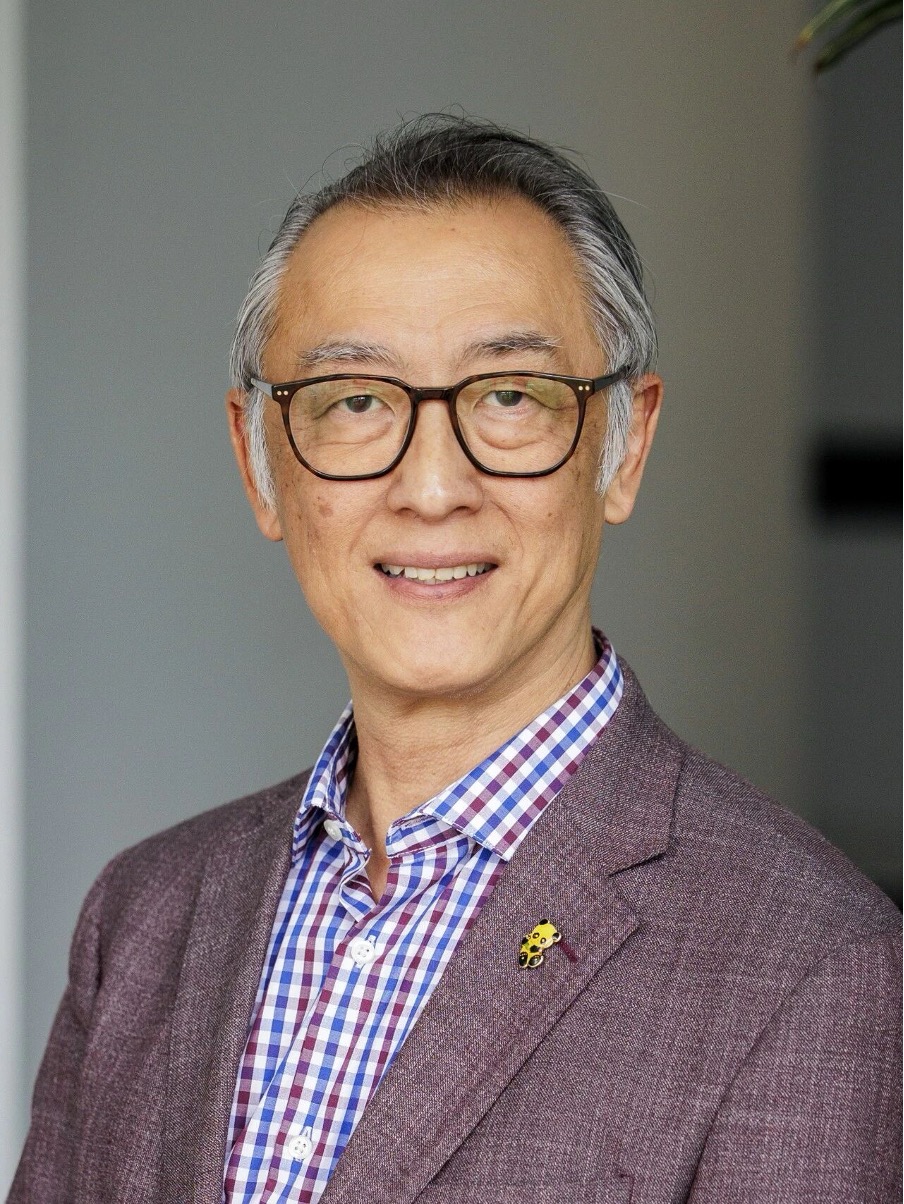
He was raised with values including compassion, humility, respect for others and the importance of giving back. These principles have continued to shape both his professional life and his community involvement, including volunteering, mentoring emerging leaders and serving not-for-profit organisations.
“Success was never measured solely by personal achievement, but also by how we could help others,” Arnold said.
For Arnold, business leadership should extend beyond commercial success. People with professional skills, influence and resources also have an opportunity to strengthen the communities around them.
Homelessness Is Often Hidden
Arnold believes awareness of homelessness is increasing within the Chinese community, but says the issue is still commonly misunderstood.
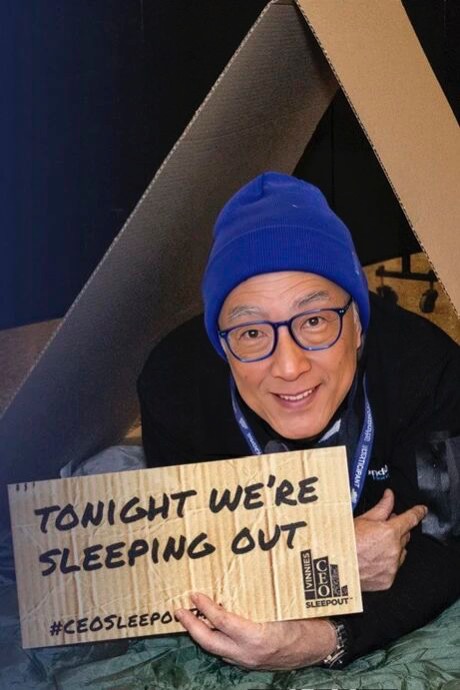
Homelessness is often associated only with people sleeping on the street. In reality, it can also affect women escaping domestic violence, older people facing financial hardship, families living in insecure accommodation, and people sleeping in cars or moving between temporary shelters.
These experiences may remain hidden because the people affected do not always fit the public image of homelessness.
Arnold also emphasised that homelessness rarely has a single cause. Housing unaffordability, rising living costs, family violence, mental health challenges, unstable employment and social isolation can all contribute.
Addressing the issue therefore requires more than emergency accommodation. It calls for coordinated support across housing, healthcare, employment, education and community services.
While one night outdoors cannot reproduce the reality of homelessness, Arnold said the experience offered an important reminder of what many Australians face every day.
“Leadership is not only about business success, but it is also about using our skills, influence and resources to make our communities stronger,” he said.
Howard Ong: Inspired by a Family Tradition of Service
IT entrepreneur and community advocate Howard Ong participated in the CEO Sleepout for the fifth time this year.

Growing up in Singapore, Howard learned the value of community service through the example set by his parents, who first met while volunteering for a community organisation.
He also remembers his father using his own money to help repair a road in the village where he had grown up. Acts like these left a lasting impression on Howard and helped shape his own approach to service and leadership.
“My parents’ many acts of sacrifice and service have left a deep impression on me and serve as my motivation,” Howard said.
Through his continued involvement in the CEO Sleepout, Howard has observed growing public awareness of homelessness. He believes the participation of Asian business leaders, together with Chinese-language media coverage, has helped bring the issue into more conversations within the Chinese community.
More Working People Are Seeking Help
Howard described homelessness as a complex issue without a single solution.
Family violence, relationship breakdown, business failure, illness and financial hardship can all place people at risk of losing stable housing.
He also pointed to the increasing pressure created by rising living expenses. Frontline organisations such as Vinnies and Foodbank are now assisting more people who have jobs and incomes but are still struggling to afford essential costs.
This challenges the assumption that homelessness and financial distress affect only people who are unemployed or disconnected from the workforce.
Howard believes meaningful progress requires collaboration between governments, charitable organisations, businesses and the wider community.
“A problem this complex needs the collaboration of community members, Government and charitable organisations. And it starts with me,” he said.
His message to other business and community leaders is simple: participation matters. Whether through joining the Sleepout, volunteering, donating or raising awareness, leaders can encourage others to become involved.
Dr Eunice Sari: A Home Is More Than a Place to Sleep
Dr Eunice Sari joined the CEO Sleepout for the first time this year.
A Perth-based researcher, entrepreneur and advocate for human-centred technology, Eunice works across industry, academia and community development. She is the Director and Co-Founder of the Western AI Hub and the Co-Founder of Marginpreneur, an initiative supporting entrepreneurs from migrant, refugee, First Nations, and other underrepresented backgrounds.
Eunice said her faith shaped her broader commitment to social justice, her experiences living in Australia and several other countries, and her own encounters with inequality.
She also shared that she had previously experienced severe housing instability, having moved frequently without always being able to secure suitable accommodation.
This personal experience, together with witnessing homelessness in her neighbourhood, motivated her to participate in the Sleepout and encourage others to take action.
Housing Insecurity Within Migrant Communities
Eunice highlighted housing affordability, migration-related pressures and family breakdown as major contributors to homelessness.
She also noted that some Chinese and Asian international students may experience direct or indirect forms of homelessness due to accommodation shortages, limited finances and the challenges of living without established local support networks.
For Eunice, homelessness is not defined only by whether someone has a roof over their head.
“Homelessness is not only about having no place to sleep, is about not being able to feel home due to many reasons,” she said.
Family breakdown, mental health challenges and a lack of security or belonging can all contribute to a person feeling displaced, even before they lose access to physical accommodation.
Eunice believes communities should become better at recognising early signs of housing instability, isolation and family distress, so support can be offered before someone reaches a crisis point.
Multicultural Communities Are Part of the Solution
Arnold, Howard and Eunice come from different cultural backgrounds and have different personal experiences.
Arnold’s understanding of responsibility was shaped by the values of his Chinese family. Howard was inspired by his parents’ lifelong example of volunteering and service. Eunice’s commitment developed through faith, migration, personal experience and her work supporting underrepresented communities.
What connects them is their willingness to participate in the society around them.
Their stories show that Chinese and Asian Australians are not standing outside the social challenges facing Western Australia. They are business leaders, professionals, mentors, volunteers and community advocates actively contributing to the place they call home.
Homelessness is not an issue belonging to one particular group. Housing pressure, illness, family changes, migration challenges and unexpected financial hardship can affect people from almost any background.
Helping does not always require a grand gesture. It may begin with a donation, a volunteer shift, a conversation, sharing a story or noticing when someone around us is struggling.
Every person has something they can contribute.
What skills, resources or influence do we already have—and how might we use them to help someone else feel safer, supported and more at home?
Stories That Bring Communities Together
At Sensory Media, we share real-life stories from across Western Australia’s multicultural communities—stories that help people see one another more clearly, deepen mutual understanding, and bring diverse communities closer together.
We believe that meaningful connection often begins with a story: a person quietly contributing to the community, an experience that challenges assumptions, or an initiative creating positive change across cultures.
Know a Story Worth Sharing?
We welcome story ideas from individuals, businesses, community groups and organisations.
Perhaps you know an inspiring person whose contribution deserves greater recognition, a multicultural community story that has not yet been told, or an experience that could help others better understand a different culture, identity or way of life.
We would love to hear from you.
Share your story with Lucia Chen:
lucia.chen@sensorymedia.com.au
Together, we can give meaningful stories a wider voice—and help build a more inclusive, connected and harmonious Western Australia.